Reforge Membership · 2022–2023
Moving team memberships to flat tiers
Reforge offered on-demand learning and live courses for product and growth practitioners and their teams. I led design as team memberships moved from per-seat pricing to flat tiers, with separate live-course passes. My work connected buyer research, customer journeys and design reviews across a phased migration.
- My work
- Design lead and player-coach. Buyer research, journey design, team reviews and QA.
- Team
- Product design, PM and engineering, with sales, finance and the chief of staff.
- Product status
- Pricing launched in 2023

Product and pricing
Team seats and live-course passes
Reforge’s learning membership combined an on-demand content library with scheduled live courses, called cohorts. Individuals used it to develop their product and growth skills. Team buyers paid for access and managed membership for their colleagues. The bundled offer did not fit members who wanted to keep learning from the content but could not commit to live courses.
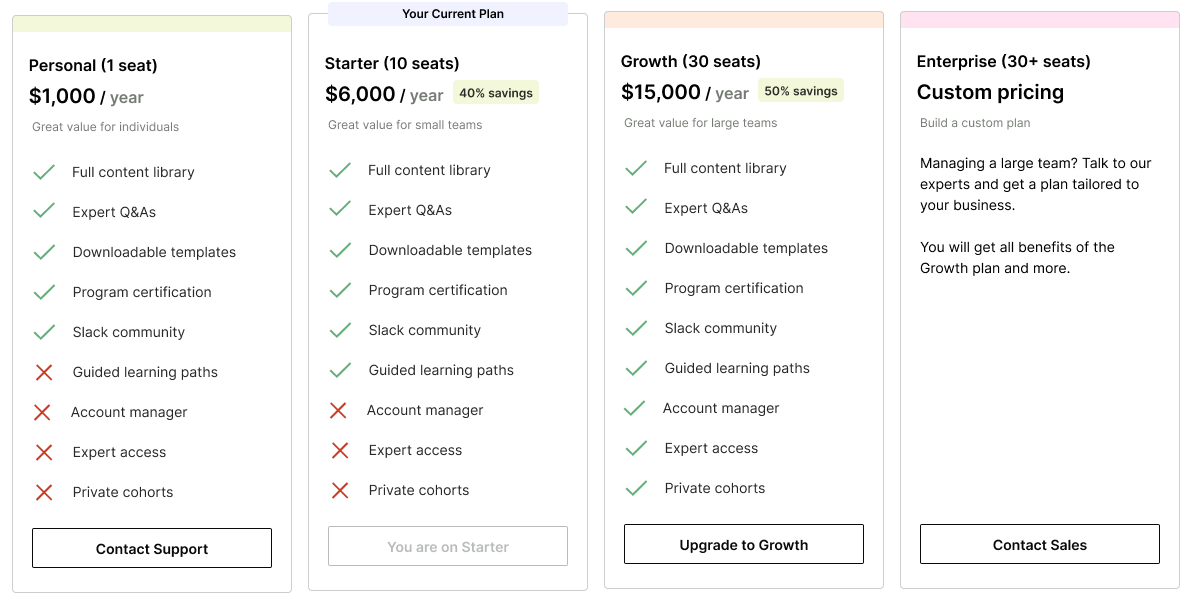
The new model replaced per-seat team pricing with a flat price for a defined seat allowance. Live-course access became a separate purchase through cohort passes. Teams could give more people library access, then buy and assign passes to the people ready to join a live program.
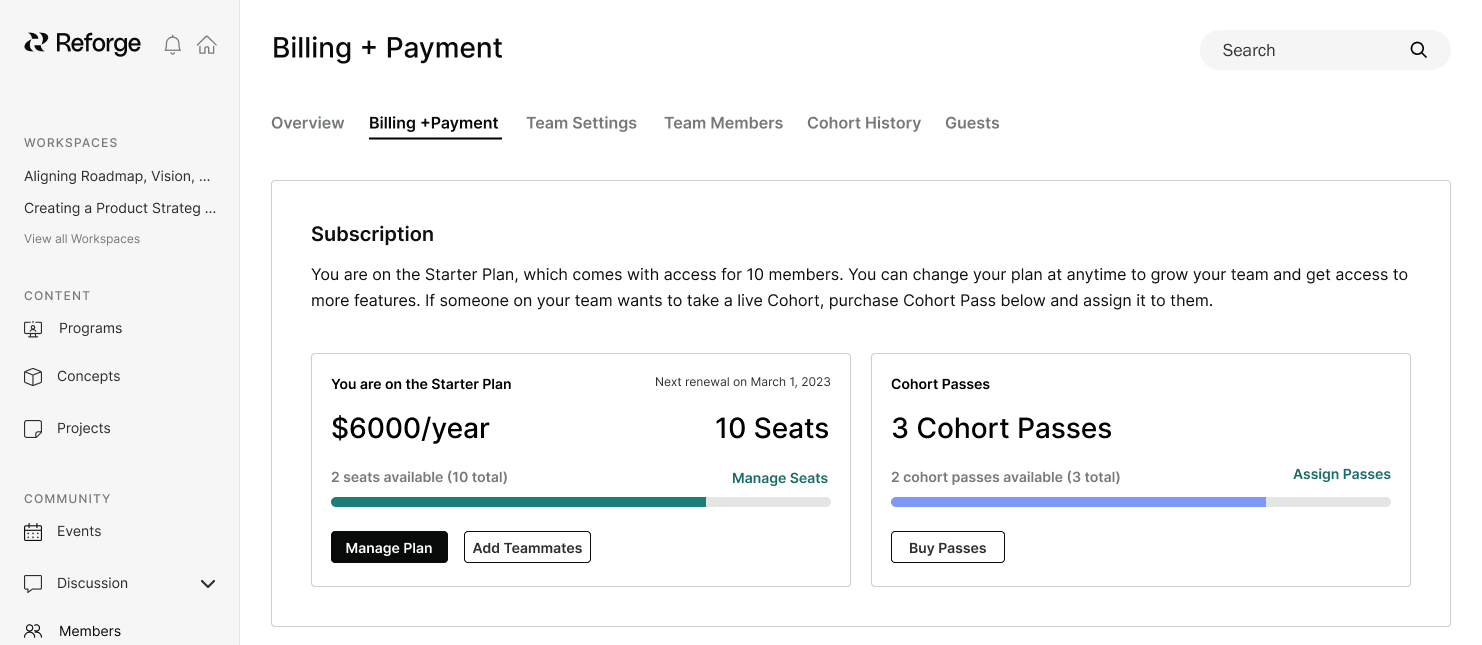
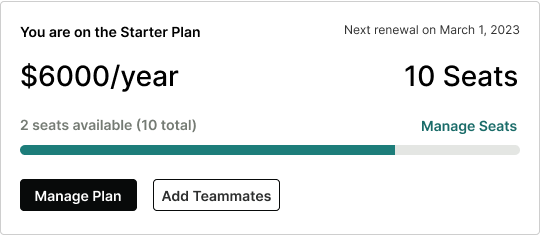
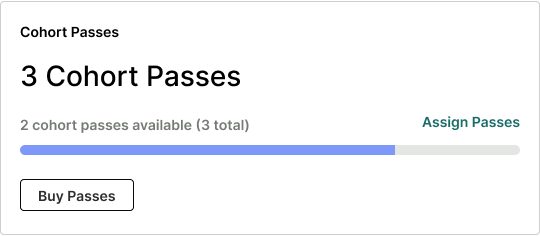
That change reached beyond a pricing page. I coordinated design across renewal, purchase and account management, working with the PM on the migration and with designers responsible for different parts of the experience. I owned the high-level journeys, reviewed their work and designed some screens and flows myself.
Research before the rollout
What buyers were paying for
I led the interview process with our chief of staff and head of sales to test willingness to pay and understand problems with the existing offer. The team’s market review also examined how learning products and software companies packaged individual access, team plans and sales-assisted purchases.
Our interviews with team-subscription buyers pointed to a sequence: first establish the material’s relevance, then whether the learning format fits, then assess the price. A lower price alone would not answer whether someone had time to use the membership.
- Relevance
Does the material help with the team’s work?
- Learning format
Can people use it with their time and support needs?
- Price
Does the value justify the cost and fit the budget?
“value is the content”
Some buyers treated live cohorts as an add-on to the content they already valued.
“people on the periphery who would benefit…”
A broader seat allowance could include colleagues beyond a team’s most active learners.
The findings also exposed a tradeoff. Flexible access suited people learning at their own pace, while live cohorts supplied structure and accountability. Separating the two could make the offer fit more budgets, but might remove the commitment that helped some members get started.
This was qualitative research with varied team segments. The synthesis called for further validation and did not test individual members’ willingness to pay.
Scope and sequencing
Renewing members came first
We prioritized existing members approaching renewal. Launching for new buyers at the same time would have added signup, onboarding and marketing work beyond the initial release window. I coordinated the design work across these phases with the PM.
The team combined flat tiers and separate cohort purchases into that renewal release. Two successive pricing changes would be harder to explain, while retaining several cohort bundles within every tier would multiply the choices. Existing members could choose their upcoming plan before it took effect at renewal.
- Renewal migration
Plan selection, renewal notices, billing changes and cohort-pass purchasing for existing members.
- New purchases
Signup, onboarding and a purchase flow for people joining under the new model.
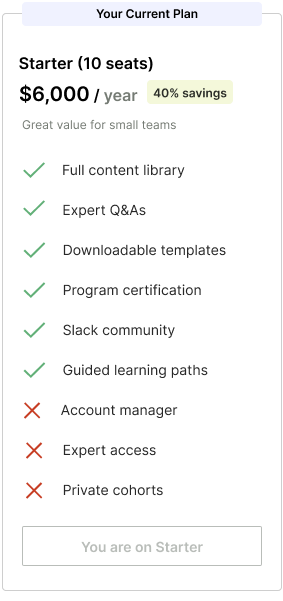
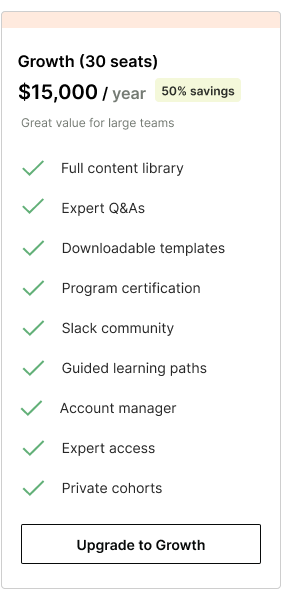
One tier boundary remained deliberately firm: needing a single seat beyond the allowance meant buying the next full tier. The comparison needed to make the current allowance, upgrade and sales route explicit. Prorating an upgrade was a separate requirement, with the calculation to be resolved with Finance.
Experience audit
Map the account’s starting state
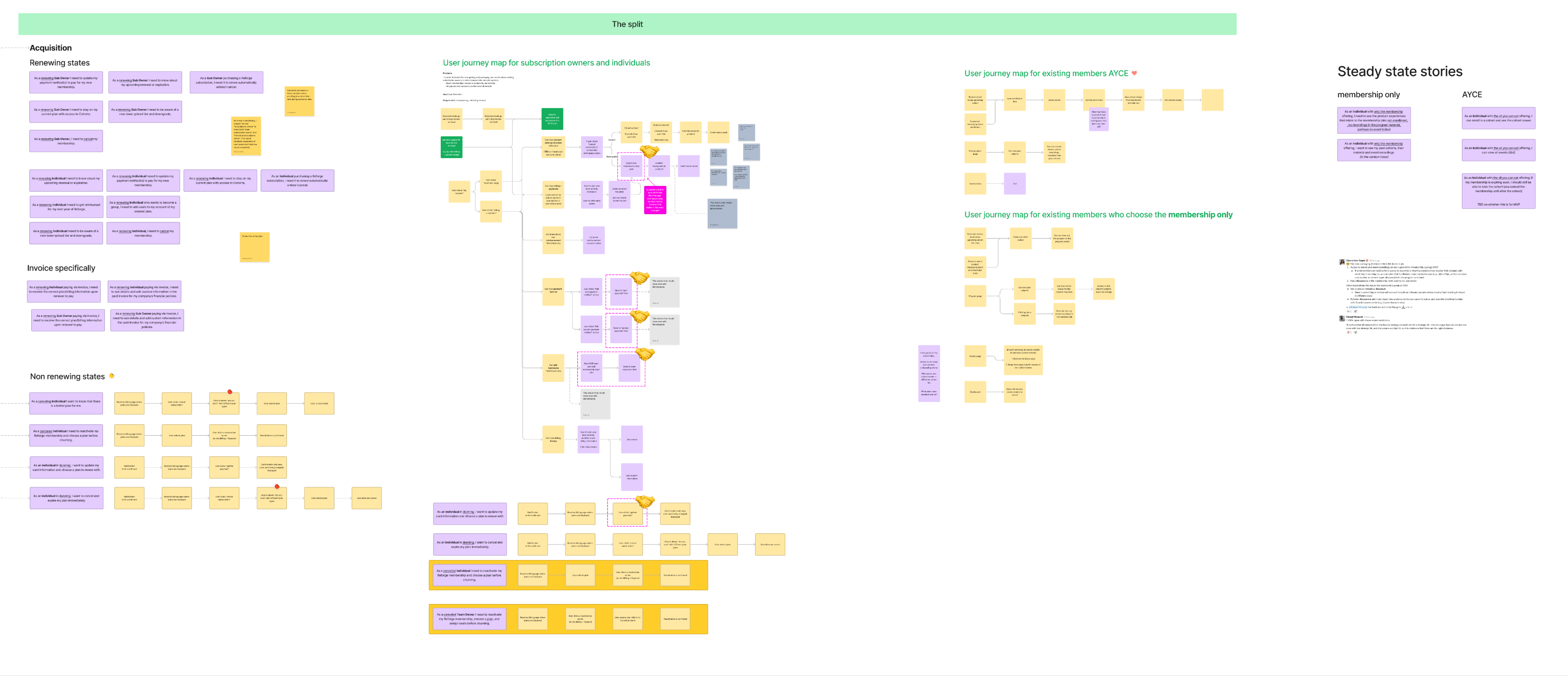
I worked at the journey level to keep the migration connected. A renewing team owner, a canceled individual member and someone with a failed payment could not all start from the same screen. The story audit connected those user needs to the paths through the new model.
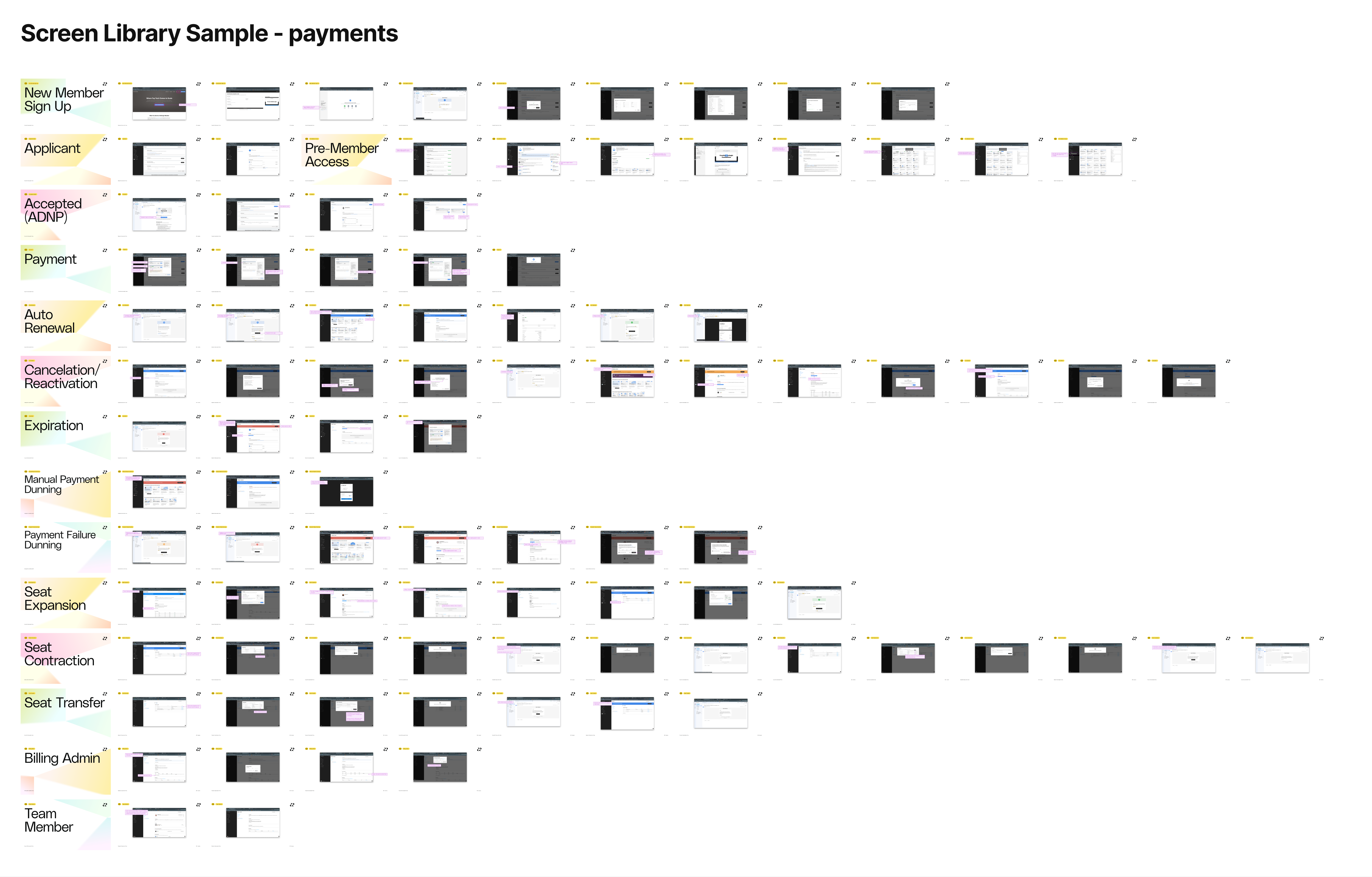
I paired journey mapping with a screen-by-screen audit of the existing subscription experience. The library covered renewal, cancellation, reactivation, payment recovery and seat changes. It made the existing rules and entry points visible before we changed them.
Payment recovery was more than updating a card
The audit showed two different recovery paths. An overdue manual invoice had to be paid through Stripe’s invoice portal or resolved with support. In the failed-card flow, updating the card immediately charged the subscription and restored the account to active.
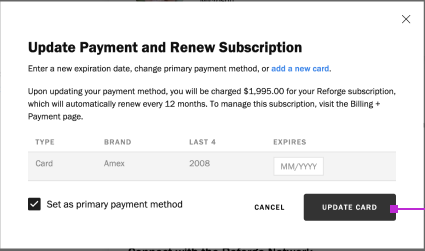
Those distinctions mattered during migration. The tracker called out a legacy team owner who needed to select a new plan before fixing the payment and confirming it. Treating that journey as a generic “update payment” task would miss the plan decision.
- Select the new plan
- Resolve the payment
- Confirm the change
Design direction and QA
Track the work between teams
Designers tackled different areas of the UX and UI. I coordinated the high-level flows, reviewed designs against the journeys and worked with the PM to surface unresolved questions. Auditing and QA focused on the transitions between screens, including where one team’s work handed off to another.
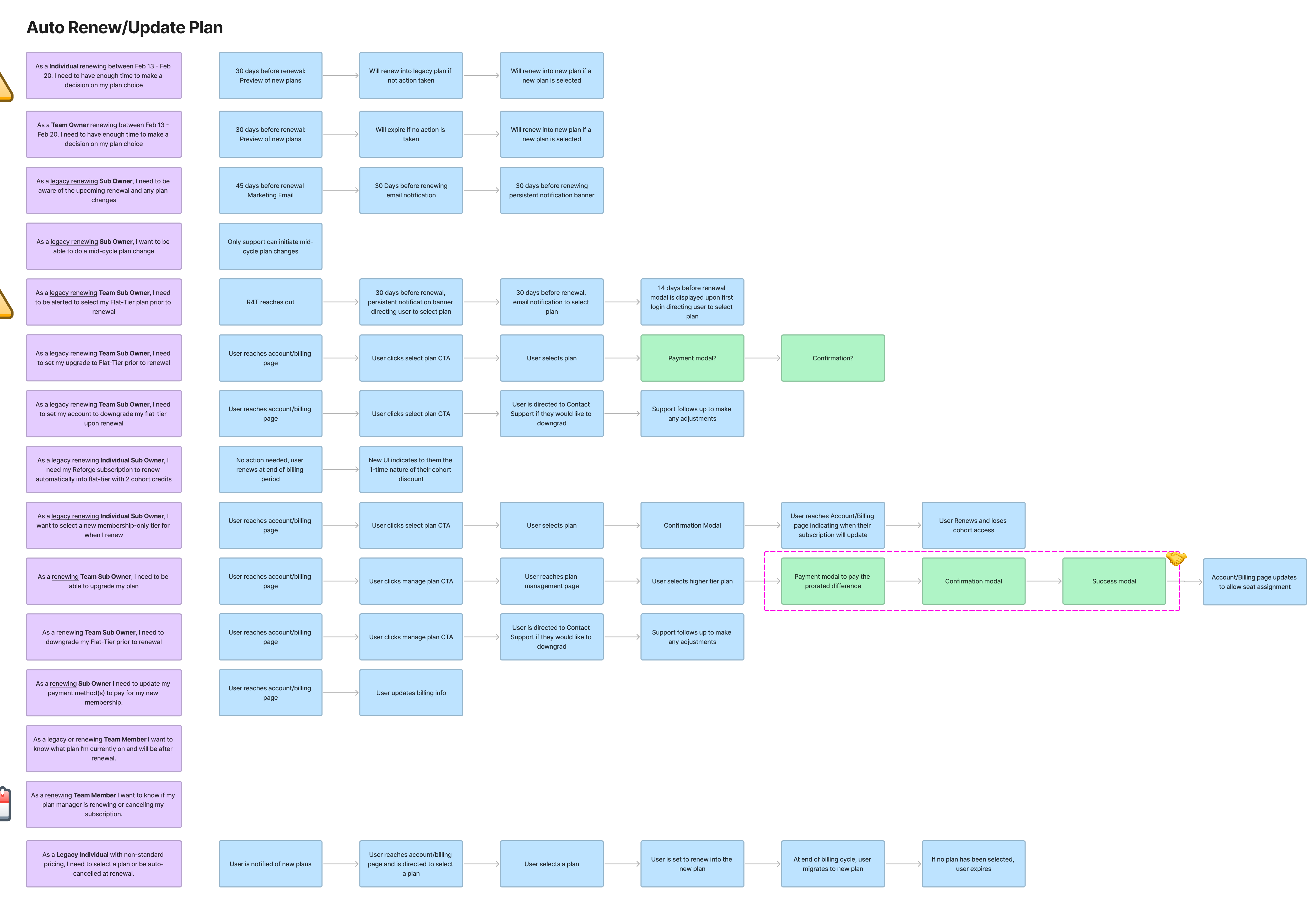
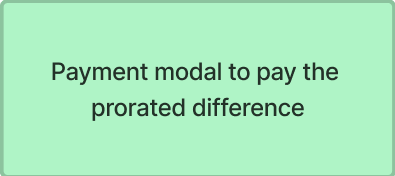
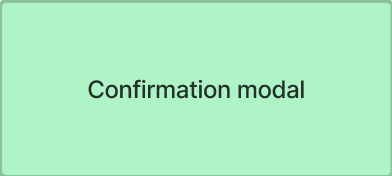
The tracker distinguished work ready for engineering from work in progress, questions needing UX clarification and items outside the current milestone. Its handoff markings made cross-team dependencies visible. In the upgrade path below, payment, confirmation and success were grouped together before the billing page could enable seat assignment.

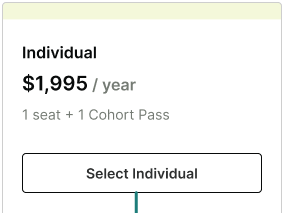
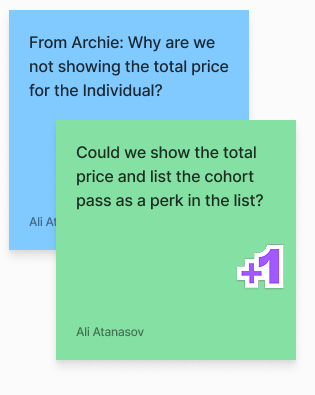
Reviews also checked whether the new offer stayed understandable across phases. In the later purchase-flow review, the team questioned how to show the individual plan’s total price and its included cohort pass. That was the same packaging problem appearing again in interface copy.
Interaction design
A readable checkout total
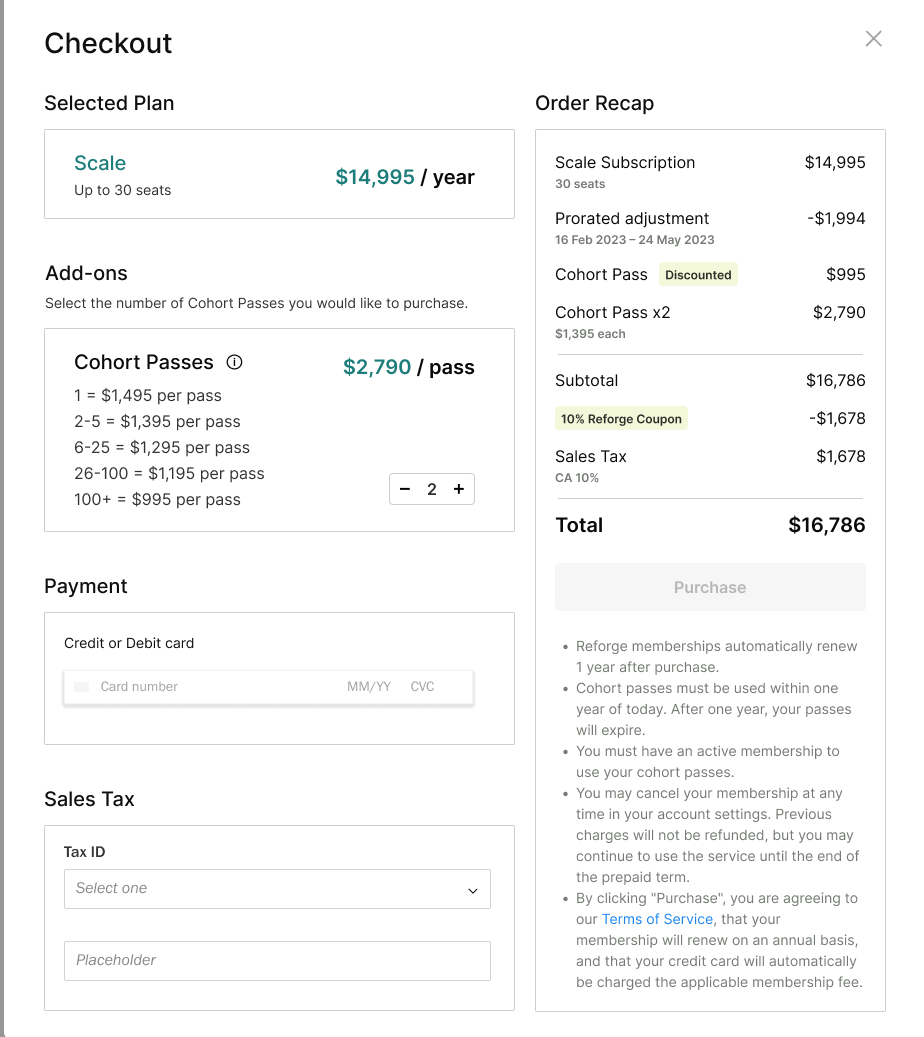
Checkout had to explain a yearly membership alongside transactional cohort passes. Pass quantities changed the unit price. A purchase could also include a discounted pass, a coupon, a prorated adjustment and sales tax. The interface needed to keep the buyer’s selections and the amount due understandable together.

Explain each part of the total
- Plan and capacity
- The annual membership price and the number of seats it covers.
- Passes and discounts
- Quantity pricing, a discounted pass and an order-level coupon are separate parts of the calculation.
- Proration and tax
- A dated adjustment for the plan change, tax details and the resulting total.
- Terms after purchase
- Membership renewal, pass expiry and the active-membership requirement for using passes.
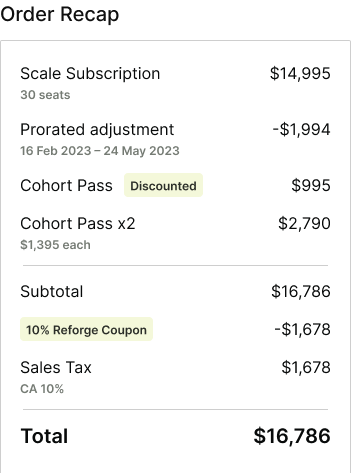
The desktop specification placed the order recap beside the inputs so the cost remained adjacent to the selection. At phone widths, checkout became a full page, with selection, payment and recap in reading order. The wider project also had to bring tax collection into the rollout as cohort purchases became separate transactions.
Delivery and early evidence
New plans launched. Renewal results were mixed.
By the March 2023 readout, customers were moving onto new plans and purchasing, assigning and using cohort passes. The team reported encouraging early renewal signals, but renewal targets were still unmet. Delayed team payments also complicated the distinction between a late renewal and churn.
Reforge publicly announced the new pricing and packaging on May 30, 2023. My contribution was coordinating the design of the migration across customer journeys and release phases, alongside the designers and engineers delivering each area. The available early results do not establish a lasting retention improvement.
Read the pricing and teams announcement ↗